Beautiful Americans
Posted by: John on: October 24, 2009
- In: 2009
- Leave a Comment
 Silag, Lucy. Beautiful Americans. 2009. 308 p. Razorbill, $16.99. (9781595142221). Gr. 10-12.
Beautiful Americans, the first novel in a planned trilogy, offers up a slice of Americana, teen soap opera style: drama, a spoiled rich girl, parties, drama, the happy-go-lucky gay guy, drama, a mysterious girl with a scandalous past, parties, drinking, and plenty of drama. Set in Paris, the book follows the exploits and intrigues of a group of American students enrolled in a French-language study program. –John Andrews
Ash
Posted by: John on: October 24, 2009
- In: 2009
- Leave a Comment
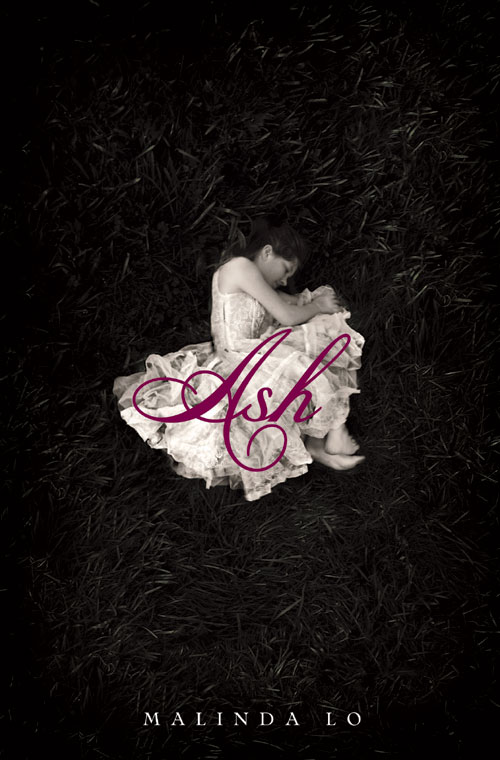 Lo, Melinda. Ash. 2009. 264p. Little Brown, $16.99. (9780316040099). Gr. 8-12.
Aisling, better known as Ash, is a haunting and engaging Cinderella in Malinda Lo’s new spin on the fairy tale set in a medieval realm in the twilight of its magical past. Ash spends her days acting as servant to her family while finding reasons to live in her feelings for Kaisa, the King’s huntress. Torn between her emerging love for the King’s mysterious huntress and the ethereal draw of the world of the fairies and its connection to her mother, Ash ultimately discovers the strength of her own identity. All of the characters feel real, and Ash in particular is as believable as her cartoon counterpart is not. Her strength and motivation, along with her mistakes and hesitation, work to reveal a very full and rich character.–John Andrews
Secrets of Truth & Beauty
Posted by: John on: September 29, 2009
- In: 2009
- Leave a Comment
 Frazer, Megan. Secrets of Truth & Beauty. 2009. 347p. Hyperion, $15.99. (978-142311711-7). Gr. 9-12.
At age seven, Dara was a darling pageant winner; at 17, she has gained too much weight and anger, a fact that leads her to find the sister who ran away from home 17 years earlier on a commune that includes a gay high school senior and her lesbian sister. Dara’s road to self-discovery unravels the family secrets and her personal road to acceptance. The depictions of the memorable characters are right on, and Dara’s characterization is particularly complex. In her first novel, Frazer pursues such issues as attitudes toward lesbians and gays as well as the obsession with thinness as a mark of beauty. –Nel Ward
Visible: A Femmethology
Posted by: John on: September 29, 2009
- In: 2009
- Leave a Comment
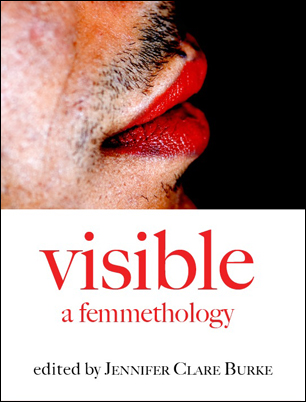 Visible: A Femmethology. 2v. Ed. Jennifer Clare Burke. 2009. 181p/171p. Homofactus Press, $19.95 ea. (9780978597344/978-0-9785973-5-1). Gr. 11-12.
Through their diverse experiences, 57 contributors—female, male, and trans–challenge conventional ideas of how disability, class, nationality, race, aesthetics, sexual orientation, gender identity, body type, and age intersect with notions of femmedom to celebrate its diversity. The narratives about experiences will fascinate older teens. This is a book that provides querying young people with information about the world that they are entering. As the description says, this two-volume anthology “calls the LGBTQI community on its prejudices….” —Nel Ward
For You and No One Else
Posted by: John on: September 29, 2009
- In: 2009
- Leave a Comment
 Van de Vendel, Edward & Martijn van der Linden. For You and No One Else. 2009. unp. Lemniscaat/Boyds Mills Press, $16.95. (978-1-59078-658-1). Gr. K-2.
Buck is crushed when his friend, Sparklehart, uses the special gift presented to him by Buck to woo all the does but cheers up when he finds an even better gift and has the courage to tell Sparklehart that this gift is “for you and no one else!” The message is quite subtle but does show that the two bucks can be very special to each other. Quirky black and white designs accented by green lettering illustrate both Buck’s and Sparklehart’s mood changes as they grow to understand how special each is to the other. —Nel Ward
Into the Beautiful North
Posted by: John on: September 29, 2009
- In: 2009
- Leave a Comment
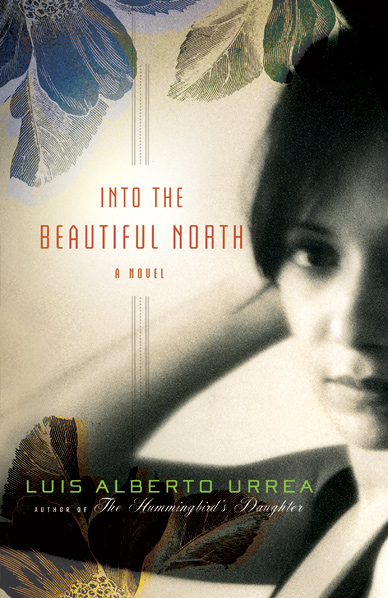 Urrea, Luis Alberto. Into the Beautiful North. 2009. 342p. Little, $24.99. (978-0-316-02527-0). Gr. 10-12.
One night the people in a small coastal Mexican town watch Yul Brenner; the next day, three teenage girls and a gay man plan to sneak into the United States to find seven brave men who will save their village from the narcs and bandidos who plunder it after all the men leave. Nineteen-year-old Naveli has another purpose for going: her father left his family three years earlier to go to Illinois. The resulting journey is a beautifully detailed and complex picture of the Mexican countryside, Tijuana, and migration with all its poverty and cruelty in contrast to the perspective of the U.S. as a foreign country with black humor woven throughout. Among the unforgettable characters are Naveli’s aunt Irma who becomes the town’s first woman mayor, the generous couple who gave the four a shelter in Tijuana, the first warrior that Naveli finds, the helpful librarian who helps Naveli find her father, and the border patrolman who decides to save the odyssey because of his growing belief in Naveli’s cause. Despite the misery that the protagonists experience, the end provides a sense of hope for the future. This picaresque novel is a must reading for anyone in the United States. —Nel Ward
Into the Beautiful North
Posted by: John on: September 29, 2009
Urrea, Luis Alberto. Into the Beautiful North. 2009. 342p. Little, $24.99. (978-0-316-02527-0). Gr. 10-12.
One night the people in a small coastal Mexican town watch Yul Brenner; the next day, three teenage girls and a gay man plan to sneak into the United States to find seven brave men who will save their village from the narcs and bandidos who plunder it after all the men leave. Nineteen-year-old Naveli has another purpose for going: her father left his family three years earlier to go to Illinois. The resulting journey is a beautifully detailed and complex picture of the Mexican countryside, Tijuana, and migration with all its poverty and cruelty in contrast to the perspective of the U.S. as a foreign country with black humor woven throughout. Among the unforgettable characters are Naveli’s aunt Irma who becomes the town’s first woman mayor, the generous couple who gave the four a shelter in Tijuana, the first warrior that Naveli finds, the helpful librarian who helps Naveli find her father, and the border patrolman who decides to save the odyssey because of his growing belief in Naveli’s cause. Despite the misery that the protagonists experience, the end provides a sense of hope for the future. This picaresque novel is a must reading for anyone in the United States. —Nel Ward
Pink!
Posted by: John on: September 29, 2009
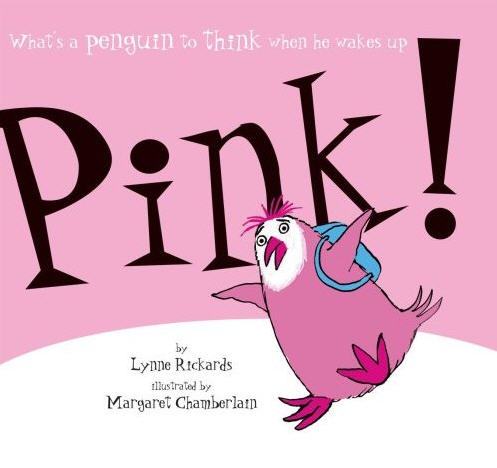 Rickards, Lynne. Pink! Il. Margaret Chamberlain. 2009. unp. Chicken House/Scholastic, $16.99. (978-0-545-08608-0). Gr. K-2.
What’s a bright pink penguin to do? Well, after doctor who tells Patrick that there is nothing she can do, his father suggests he live with the pink flamingos. He can’t fit in with them because he cannot catch fish the way they do, he can’t take a nap standing on one leg, and he can’t fly to the nesting ground. So he returns home where he is welcomed back, and his classmates stop teasing him. “Being different wasn’t so bad after all.” A comical book with bold, colorful illustrations, this picture book combines messages about differences, bullying, and gender identity in a delightful read-aloud story. Although some may not see this as overtly glbtq, it follows the pattern: child realizes difference, classmates tease him, parents send him to doctor, doctor doesn’t help, parents show him similarities with kids far away, kid goes away, it doesn’t work and he comes home, kid works things out for himself and accepts being different. —Nel Ward
Milk: A Pictorial History of Harvey Milk
Posted by: John on: September 29, 2009
- In: 2009
- Leave a Comment
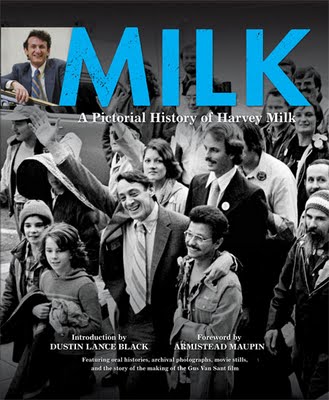 Milk: A Pictorial History of Harvey Milk. Int. Dustin Lance Black; Forewrd. Armistead Maupin. 2009. 144p. Newmarket Press, $19.95. (978-1-55704-828-8). Gr. 10-12.
In 1977, when Harvey Milk was elected to the San Francisco Board of Supervisors, he was the first openly gay man to be voted into a major public office in the United States. One year later he was shot by a disgruntled man who had resigned from the Board and then killed both Milk and Mayor George Moscone. In the past thirty years, Milk has become a hero to those who believe in human rights for the glbt community. This book is a story of how he changed history through his actions and legacy with an introduction about how his life transformed Black’s life when, while he was growing up in a homophobic Mormon household in San Antonio, heard a recording of Milk’s speech giving hope to young glbtq people. Part I, “The History,” provides a history about Milk’s life, 90 photographs ,and recollections from Milk’s activist friends in his Castro Street neighborhood about his work. Part II chronicles “The Making of the Movie,” released in 2008, written by Black, directed by Gus Van Sant, and starring Sean Penn. Peter Travers, in Rolling Stone, said about the movie: “A total triumph! Brimming with humor, heart, sexual heat, political provocation, and a crying need to stir things up. If there’s a better movie around this year, with more bristling purpose, I sure haven’t seen it. An American classic.” An inspiration to people discouraged by the passing of Proposition 8 in California and the fight about the country to repeal legislative action giving glbt people equal rights. —Nel Ward
The Mariposa Club
Posted by: John on: September 29, 2009
- In: 2009
- Leave a Comment
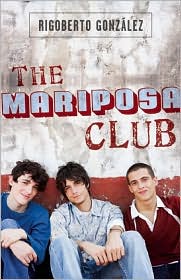
Gonzalez, Rigoberto. The Mariposa Club. 2009. 216p. Alyson, $14.95. (978-1-59350-106-8). Gr. 10-12.
During their final years in high school, the Fierce Foursome—Maui, Trini, Isaac, and Lib—want to memorialize their high schools years by creating Caliente Valley High School’s first LGBT organization, the Mariposa Club, an action that brings out a mix of love from some of their family members and violence from the local gang. Spanish for butterfly, Mariposa is generally used as a derogatory term for homosexual men in the Spanish-speaking community, but these four decide to redefine the label into a term for champions. In this book about the hardships that come from being openly gay in high school, the voices are strong and separate. Each of them shows his personality as they work through their problems in a homophobic community. The issues that they address—gays who stay in the closet, parents who reject their sexual orientation, stereotypes of gay/lesbian youth that don’t work—are realistically presented. And the dialog rings wonderfully true! –Nel Ward